Getting water away from a foundation is not glamorous work, but it is the sort of job that tells on you years later. Done right, you get a basement that smells like lumber and paint, not earth and mildew. Done wrong, you get efflorescence, lifting floor finishes, and a sump pit that never seems to rest. In London, Ontario, where the Thames River feeds a fairly high water table and many neighbourhoods sit on dense clay or clay loam, the details matter. Good drainage contractors in London, Ontario build systems that respect soil, frost, code, and the ordinary physics of how water moves.
This is how weeping tiles get installed the right way here, and how those details tie into french drains, backyard drainage, and the choices you make before a shovel goes into the ground.
London’s ground rules: soils, frost, and water
Most of the city sits on glacial till, with pockets of sand and gravel along river terraces and heavier clays in subdivisions that went up fast during growth periods. Clay swells when wet and retards flow. That means exterior drains have to carry water decisively, with proper slope and an envelope that will not plug. When I walk a house in Old North, I count on clay just beneath the topsoil. Head toward Byron and Komoka, and you find more variation, but clay lenses still surprise you.
Winters set the other boundary. Frost depth in Southern Ontario sits roughly around 1.2 metres. Any exterior line you expect to work without heave needs to sit below that, and every exit to daylight must account for freezing. The Ontario Building Code requires foundation drains around basement footings unless a lot is designed to naturally drain, and the code anticipates an outlet that will not freeze solid. Those are not mere checkboxes. They keep your system alive in February.
Water table adds the third constraint. Near the Thames or in low-lying cul-de-sacs, the groundwater can creep within a metre or two of grade in spring. In those spots, drains are only as good as their outlet. If the system cannot empty, it becomes a moat.
Weeping tile 101, in London’s version
Weeping tile is a misnomer from the days when fired clay tile, laid end to end, circled the footings. Today, we install perforated PVC or HDPE, most commonly 100 mm diameter, wrapped in a graded gravel bed and separated from native fines with filter fabric. On new builds, this lives at the base of the footing, just outside the foundation wall. On retrofits, it often becomes an interior system, sawcut into the slab edge and routed to a sump.
Both approaches have a place in London. On a mature lot with narrow side yards and a low threshold to the neighbor’s property, interior weeping tiles avoid risking undermining the footing and sidestep a tricky outlet. On homes with accessible perimeters and chronic damp walls, an exterior system paired with waterproofing gives you the best long-term outcome. French drains in London, Ontario, often get mentioned in the same breath. In many cases, a french drain is either an extension of the weeping tile to daylight, or a separate surface and subsurface trench that intercepts yard water and delivers it to a safe discharge point. The distinctions matter less than the intent: collect water in clean stone, pipe it with gravity, and discharge it appropriately.
The site walk that saves headaches
The best drainage contractors in London, Ontario start with a slow walk. I ask where water appears first and last. I look for salt tracks on the walls, ring stains behind the furnace, and any telltale bead of water at the floor-wall joint after a storm. Outside, I look for negative slope, downspout terminations within two metres of the wall, and old patches of tar that hide hairline cracks. Then I pull a post-hole auger and dig a couple of test holes along the proposed line. Disturbed soil can trick you. Native profile tells the truth.
Before any digging, Ontario One Call marks utilities. Gas lines sometimes dogleg close to the footing as they enter the house, and old properties hide abandoned services. I also check municipal rules https://brooksjhnj517.trexgame.net/eco-friendly-basement-waterproofing-options-in-london-ontario on sump pump discharge. Many wards prohibit tying sump outlets into sanitary lines, and some streets lack a storm lateral. If I cannot daylight to a swale or ditch, I plan a sump basin with a check valve and an insulated exterior discharge that will not ice up and backflow.
Exterior weeping tile done right
Exterior systems are labor, not magic. The craft shows up in bedding, slope, and clean terminations. On an older brick house in Wortley Village last spring, the homeowner had patched interior paint three times without chasing the source. We stripped 24 metres of wall, installed new weeping tiles, and the smell in the basement changed within a week.
Here is how a proper exterior install proceeds when the lot allows it:
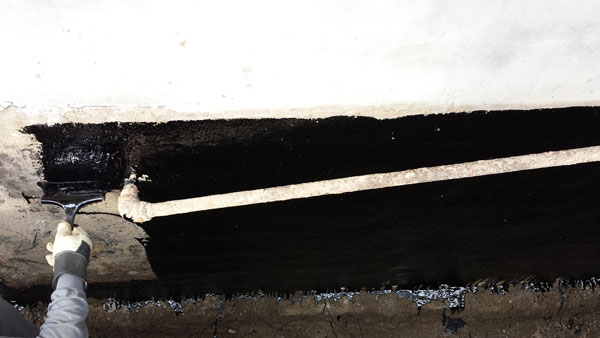
- Layout to discharge: start at the footing elevation and find your exit. If the property falls to a rear swale, perfect. If not, a sump at one corner becomes your collector. I aim for a fall of 1 percent on the pipe when possible, which means 10 mm per metre. On short runs, I accept 0.5 percent if trench depth or other structures constrain me, but I will not run flat. Dig with care: we excavate to the bottom of the footing and widen the trench to give room for stone, pipe, and hands. Spoils get staged on tarps a metre back from the edge to reduce surcharge on the wall. If clay starts crumbling at the edge, we bench or shore. Basement windows, gas meters, and decks dictate tempo. Prepare the wall and footing: I scrape the wall clean, fill honeycombs in the parging, and ease any sharp footing corners that could cut the fabric. This is where cracks show. If I see a vertical crack that weeps, I inject epoxy or polyurethane, then apply a waterproofing membrane. In London, I most often use a liquid-applied elastomeric and a dimpled drainage board. The dimple board is not decoration. It creates a small air space so any water that reaches the wall has a path down to the tile. Build the drain bed: we set a 100 mm thick layer of 19 mm clear stone at the base. Clear means no fines. Clay and silt are the enemy. Over that, the perforated pipe sits with holes at roughly 4 and 8 o’clock, not pointing straight down. That orientation encourages water to flow in from below and the sides, while the bottom of the pipe stays strong. Wrap and protect: stone goes over the pipe to at least 150 mm above, then the entire envelope gets wrapped in nonwoven geotextile. On heavy clay sites, I extend the fabric up the wall a bit to keep fines from washing into the stone during backfill.
The outlet seals the deal. If I have daylight, I run solid pipe from the last cleanout to a pop-up emitter or to a riverstone splash that will not erode. I still install a sump at the low corner for redundancy, with a sealed lid and a pump that can handle 7,000 to 10,000 litres per hour. Many basements in London will see that volume during a spring surge.
Backfill is not just pushing dirt. I stage the native soil in thin lifts and keep heavy lumps out. Clay backfills poorly, so I prefer to cap with a layer of granular A or B along the top 200 to 300 mm to set the grade and encourage surface runoff. If a homeowner wants to reinstall garden beds, I leave a memo that organic mulch should not pile against the wall. Mulch traps water, and water always finds the seam.
Interior weeping tile, when the yard will not play along
Interior systems earn their keep on tight lots, deep basements, and homes with driveways or porches hard against the wall. The physics is the same, but the trench moves inside the footprint. On a bungalow in White Oaks, we cut a 300 mm strip of slab along the perimeter, chipped out to reach the top of the footing, and set the pipe in a bed of clear stone. Small weep holes drilled in the lowest course of block allowed the wall cavity to drain. The line sloped to a sump pit set near existing power, with a dedicated circuit and a high-water alarm. We sealed the trench with new concrete and tied in the floor drains, making sure to maintain a trap and an air gap so sewer gases could not travel back.
Interior weeping tiles do not keep the wall itself dry, but they keep the basement usable by lowering the water level under the slab. If the foundation shows active seepage, pairing the interior system with exterior crack injections or exterior membranes, at least on the worst wall, can make a big difference.
The small details that separate a professional job
A lot of what follows feels like overkill until the first heavy storm. Then the benefits become obvious.
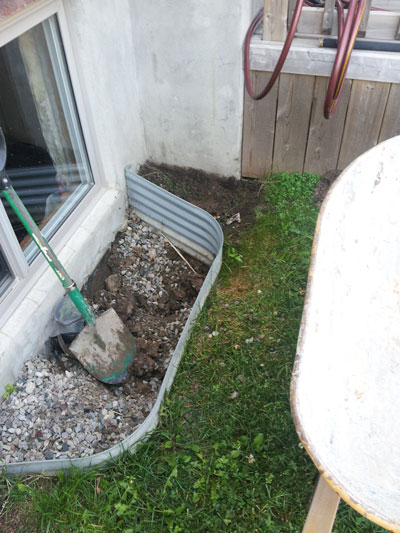
- Cleanouts at corners: a small vertical riser with a screw cap at each major turn lets you flush the system with a garden hose. In London’s clay, even with fabric, a bit of silt floats in over the years. Being able to service the line after a decade is cheap insurance. Pipe choice: I favor rigid PVC for long straight runs because slope stays true and it resists crushing during backfill. Corrugated HDPE flexes and speeds up work around curves, but if it is not bedded well, it can belly. On most London installs, we mix both, with rigid on the long legs and corrugated on short transitions. Stone gradation and volume: 19 mm clear stone is the workhorse. Around window wells, I increase the stone envelope and extend fabric to the surface under decorative rock. If you skimp on stone, the pipe ends up doing all the work, which is like using a straw instead of a trench. Membrane and board: waterproofing is not damp proofing. Asphaltic sprays alone will not cut it if the wall already weeps. A proper elastomeric membrane, applied to spec for thickness, paired with a dimple board that runs from grade to the footing, gives water a path that does not involve your rec room.
Where french drains and backyard drainage fit
People sometimes ask for french drains in London, Ontario as if they are a separate category. In practice, I use the term for two patterns that complement weeping tiles.
The first is an interceptor drain near the surface. Picture a trench 300 to 450 mm deep that runs along the base of a sloping yard, lined with fabric, filled with clear stone, and perhaps equipped with a perforated pipe. It intercepts sheet flow from a neighbor’s lot or a hill and keeps it from resting against your foundation. When a yard in Masonville backed water toward a walkout, we set a shallow french drain 4 metres off the wall, 20 metres long, and it drained to a side swale. The basement stopped musty smells without touching the foundation.
The second is a discharge path. Your weeping tiles or sump pump need an outlet. A shallow french drain along a side yard, finished with sod up top, spreads that water under the lawn without making a muddy track or icing the sidewalk. In winter, I switch to an insulated discharge with a freeze guard that spills near grade if the line ices beyond. That way, the pump still moves water even on a -15 C day.
Backyard drainage in London, Ontario usually means grading first, then targeted sub-surface measures. A rule of thumb is 2 to 3 percent slope away from the house for the first two metres. Where fences, patios, or mature trees lock a yard in place, drains make up the difference. I avoid connecting roof downspouts directly into yard drains unless there is plenty of capacity, a cleanout, and a safe daylight exit. The volume off a 120 square metre roof during a summer storm will overwhelm a little trench in minutes.
A short playbook for homeowners before calling contractors
- Walk your basement after a rain and note exactly where water appears or smells develop. Photographs help. Find your likely outlet. If you cannot see a spot to daylight a pipe, expect a sump and pump in the plan. Mark utility entries, especially gas and power, and call for locates. It speeds proposals and avoids surprises. Check municipal guidance on sump discharge and lot grading. What you can do at the curb varies by street. Gather two or three quotes that include pipe type, stone spec, membrane details, and warranty in writing.
Slopes, numbers, and tolerances that matter
On paper, water follows grade without complaint. In a trench, it does what the shovel gave it. I use a laser level to set slope. Over 15 to 30 metres, a 1 percent fall keeps water moving without forcing the pipe so deep that you risk getting under the footing or making the outlet impossible. On very long runs where grade is flat, I may step the pipe down with a pair of 45 degree fittings, then continue at a shallower slope. It looks odd to a layperson, but it keeps flow brisk and the trench reasonable.
Pipe diameter lives mostly at 100 mm. Larger pipe does not help much unless you expect heavy flows, like combining multiple roof leaders. What helps is capacity in the stone. A trench 300 mm wide with 300 mm of stone above the pipe can store a surprising volume before a pump ever kicks on. That buffer is what keeps sump pumps from short cycling.
Sump pump sizing varies with catchment. In London, for an average single-family home with an interior weeping tile loop, a primary pump rated near 7,500 litres per hour at 3 metres of head covers most storms. Add a battery backup that can handle at least half that rate for several hours. We wire a dedicated 15 amp circuit with a GFCI where code requires and set a high-water float tied to an alarm. I have seen too many basements flooded because a pump died quietly on a Thursday in April.
Dealing with winter
Every exterior discharge needs a winter plan. Buried lines that daylight to a curb or slope can freeze where the pipe gets shallow, even if the bulk of it sits below frost. A freeze guard fitting at the exterior wall, which allows water to spill out near the foundation if the far end is frozen, prevents backups. I do not love water pooling near the wall, but if grading and a shallow stone bed exist at the surface, that emergency overflow will sheet away without harm until the thaw opens the outlet again.
Insulating the exterior discharge for several feet past the wall also helps. A simple foam jacket, protected with a UV resistant wrap, buys you weeks. On properties with no good gravity outlet, I sometimes run dual discharges, one buried, one seasonal above grade that can be swapped in late fall.
Mistakes that keep me in business, and how to avoid them
The most common errors I see on weeping tiles in London, Ontario trace back to rushing. A contractor bids a price that only works if the trench opens and closes in a day, so corners get cut. Here are a few patterns:
- No fabric around the stone. Clay fines wash into the voids, and within a couple of seasons the system slows. Your pipe may still be open, but the stone has turned into something like concrete. Flat spots and bellies. Without a level and stakes, a trench wanders. Water sits, silt settles, and the first big rain pushes debris into the low point. Cleaning it later is hard if there are no cleanouts. Mixing roof water with foundation drains. That 25 mm storm over a 150 square metre roof drops nearly 3,750 litres in a short span. Feed that into a weeping tile and you trade a dry wall for a flooded sump. Membrane only, no drainage board. Waterproofing membranes block liquid water, but without a capillary break and a path down, hydrostatic pressure rises. Dimple board is cheap compared to a finished basement.
None of those mistakes cost any less to correct than doing it right in the first place. They just move the budget into repairs later.
How pricing usually shakes out
Homeowners ask for numbers, which is fair. Costs vary with access, length, and whether we go interior or exterior. In London, a straight exterior run on one side of a house might land in the low five figures when you factor excavation, stone, pipe, membrane, board, backfill, and restoration. Full perimeters climb from there, especially with landscaping or concrete to remove and replace. Interior systems generally price lower per linear metre, but add a sump, electrical, and the mess of cutting and removing concrete.
What matters more than a headline number is scope clarity. A detailed quote spells out pipe type, stone gradation, membrane brand, dimple board, number of cleanouts, discharge method, and restoration to a defined point. It also identifies allowances for surprises like buried concrete or poor footing condition. That sort of transparency keeps the conversation useful when the trench reveals something the house has kept secret for 60 years.
A short, real example from the field
A couple in Westmount had persistent dampness along the north wall, plus a backyard that pitched toward the house by about 150 mm over 6 metres. Their gutters were new, and downspouts extended 2 metres, but during a June storm the north window well became a birdbath. We excavated 14 metres along that wall, down to the footing. The native soil turned to clay 300 mm below grade, as expected. The wall parging was soft. We injected two hairline cracks, applied a liquid elastomeric membrane, and set dimple board to grade. A 100 mm perforated PVC went into 19 mm clear stone, wrapped in nonwoven fabric, sloped at 1 percent to a sump basin we installed in the northeast corner. For the yard, we added a shallow french drain 3 metres off the wall with a perforated line and stone, tied to the same sump discharge but on its own branch with a cleanout. The pump sent water to a side swale via an insulated line with a freeze guard. Total trench width was 400 to 450 mm. The crew backfilled with staged clay capped with granular and set the surface grade to fall 2 percent for the first 2 metres. Four storms later, the window well held no water and the sump cycled without drama. The basement smell faded within a week.
That job did not rely on a trick product. It relied on sequence, enough stone, and a clean outlet.
Choosing the right partner
There are good drainage contractors in London, Ontario, and there are weekend crews with a rented mini-excavator. A few signs you are in the right hands: they talk about slope and stone as much as they talk about membrane, they call for locates without being asked, they show you sample pipe and fabric, they have a plan for winter discharge, and they discuss how to service the system 5 or 10 years from now. If your home needs more than just foundation work, and you are also thinking about backyard drainage in London, Ontario, look for a contractor who lays out the yard like a watershed with hard grades, soft landscaping, and sub-surface lines in concert.
Weeping tiles in London, Ontario solve a simple problem in a place where the ground does not always cooperate. Installed well, they disappear into your mental background. That is the mark of a job done right. The next time a downpour hammers the eaves and the lights flicker, you hear the sump hum once, maybe twice, and then the house returns to its steady quiet. That is what you are buying.
Ashworth Drainage — Business Info (NAP)
Name: Ashworth DrainageAddress: 514 Hale St, London, ON N5W 1G8
Phone: (519) 660-9375
Website: https://www.ashworthdrainage.ca/
Email: [email protected]
Hours:
Monday: 9:00 AM – 5:00 PM
Tuesday: 9:00 AM – 5:00 PM
Wednesday: 9:00 AM – 5:00 PM
Thursday: 9:00 AM – 5:00 PM
Friday: 9:00 AM – 5:00 PM
Saturday: Closed
Sunday: Closed
Open-location code (Plus Code): XRR3+HV London, Ontario
Map/listing URL: https://maps.app.goo.gl/9kaoXAxRtJRP1ThS9
Embed iframe:
Socials (canonical https URLs):
Facebook: https://www.facebook.com/ashworthdrainage/
X: https://twitter.com/ashworthrules
Instagram: https://www.instagram.com/ashworthdrainage/
https://www.ashworthdrainage.ca/
Ashworth Drainage provides basement waterproofing and foundation repair services in London, Ontario and surrounding areas in Southwestern Ontario.
The company helps homeowners address wet basements, water intrusion, and drainage issues with solutions that fit the property’s conditions.
Service requests can include foundation repair, waterproofing options, sump pump and drainage-related work, and related assessments.
Ashworth Drainage is based at 514 Hale St, London, ON N5W 1G8.
To reach the team, call (519) 660-9375 or email [email protected].
Business hours are Monday to Friday 9:00 AM–5:00 PM, with the office closed Saturday and Sunday.
For directions and listing details, use the map listing: https://maps.app.goo.gl/9kaoXAxRtJRP1ThS9.
Popular Questions About Ashworth Drainage
What does basement waterproofing help prevent?Basement waterproofing is intended to reduce water intrusion and moisture problems that can lead to dampness, leaks, odors, and damage over time.
How do I know if I may need foundation repair?
Common signs can include visible cracks, water seepage, shifting or uneven areas, or recurring moisture problems; an on-site assessment is usually the best way to confirm causes and options.
What areas does Ashworth Drainage serve?
Ashworth Drainage serves London, Ontario and surrounding areas in Southwestern Ontario.
What are Ashworth Drainage’s hours?
Monday–Friday 9:00 AM–5:00 PM; Saturday closed; Sunday closed.
How can I contact Ashworth Drainage?
Phone: +1-519-660-9375
Email: [email protected]
Website: https://www.ashworthdrainage.ca/
Map: https://maps.app.goo.gl/9kaoXAxRtJRP1ThS9
Facebook: https://www.facebook.com/ashworthdrainage/
X: https://twitter.com/ashworthrules
Instagram: https://www.instagram.com/ashworthdrainage/
Landmarks Near London, ON
1) Kiwanis Park2) Western Fair District
3) Covent Garden Market
4) Victoria Park
5) Budweiser Gardens
6) Museum London
7) Fanshawe Conservation Area