If you own a home in London, Ontario, the basement tells you more about the weather than the sky does. You hear spring thumping in the sump pit, smell damp earth after summer downpours, and see the first frost reflected as hairline cracks along a window well. The climate here writes directly onto concrete and block. Understanding how that happens helps you choose the right waterproofing plan, and just as important, when to put it into action.
The climate script London basements read from
London sits in a snow belt with lake effect tendencies and a river winding through it. That mix produces quick swings between freeze and thaw, long spells of saturation, and bursts of intense rainfall. Over a typical year, the city will see roughly 900 to 1,000 millimetres of total precipitation once you combine rain and the water content of snow. Winter snowfall often lands in the 150 to 200 centimetre range, sometimes more when the wind lines up off Lake Huron. Spring can flip between warm and cold in the span of a day, with heavy rain riding along those fronts. Summer brings a few biblical storms and slow, soaking systems that sit over the city. Autumn tends to be kinder, though leaf-clogged gutters make it a leak season for the unprepared.
For basements, this translates into three recurring stresses: repeated freeze thaw on the exterior of the foundation, long periods when the soil is fully charged with water and can move, and short bursts of high hydrostatic pressure during storms. If you have a wet basement, London, Ontario weather often sets the stage even if drainage or construction details provide the cue.
Soil around London, and why it matters more than you think
Weather gets the headlines, soil does the quiet work. Much of London is built on clay and clay till, with sandy pockets near old stream beds and along parts of the Thames. Clay holds water like a sponge, then swells. When it dries, it shrinks and cracks. In a year with many thaw cycles, you can get 40 to 70 freeze thaw events where surface moisture in the upper soil band expands, contracts, and shifts the bearing against your wall. Over years, that movement bows block walls, opens vertical cracks at corners, and grinds away at the seal around service penetrations like gas or water lines.
Sandy soils drain faster and relieve pressure after storms, but they carry fines, especially silty sand. Those fines wash into weeping tile beds and sump pits, slowly choking the system. In streets cut into older floodplain soils along the Thames, I have seen basements that look fine nine months of the year, then take water at the cove joint, the seam where wall meets slab, after three consecutive heavy rains. That is the water table talking. The river fills the surrounding aquifer, the gradient changes, and suddenly your footing drains are below the water level instead of above it.
When people ask why two houses, a block apart, have different moisture problems, the short answer is soil. The long answer is soil plus how weather moves that soil through a year.
How seasons stress your foundation, one by one
Early winter brings the first test. Ground that is still loose from fall rains locks up as it freezes. If your grading is flat or negative, meltwater will sit against the wall and then solidify. Ice in small cracks behaves like a wedge. It will not look dramatic this season, yet next spring you may notice a damp triangle along a baseboard near that spot.
Midwinter is quieter below grade once the frost line settles, but window wells can become bowls. Snow piles up, the low winter sun bounces heat off brick, and the well melts and refreezes. I have pulled hand-sized chunks of ice out of weeping wells in February to stop water wicking through the window frame into a finished room.
Spring is the season that makes or breaks a waterproofing plan in London. The soil is already wet, snowmelt adds volume, and rains arrive before trees start moving moisture through their roots. Hydrostatic pressure peaks at the cove joint. If your sump is marginal or your weeping tile is silted, this is the time you see the telltale crescent of dampness along the slab edge or blistered paint on the lower section of a wall.
Summer shifts the problem from steady load to peaks. Fast storms dump 25 to 50 millimetres of rain in an hour. Downspouts overwhelm little splash pads. If your eavestroughs are undersized or out of pitch, sheets of water spill right beside the footing. In older neighborhoods with clay pans a metre down, that water has nowhere to go quickly. You get seepage through mortar joints or through a hairline cold joint where a later addition meets the original foundation.
Autumn offers a maintenance window. Soil is still warm. Excavation is easier. You can clean, reseal, and correct grading before freeze sets problems in place. Too many homeowners wait until the first April flood to call, then discover every crew in town is booked.
Not all leaks are equal, and the fix follows the cause
When I evaluate a wet basement in London, Ontario, I start with the path water wants to take. Rainwater from above is a different problem than groundwater from below.
Seepage through a crack or porous mortar joint on one wall during storms points mostly to surface drainage and localized pressure. Sometimes, a proper downspout extension, fresh parging above grade, and regrading with a clay cap buy you years. If the crack is wider at the top than the bottom, you may be looking at minor settlement, often from poor compaction along a former trench. Epoxy injection, when temperature and moisture permit, bonds the wall back together. Polyurethane injection on actively leaking cracks creates a flexible barrier that accommodates some seasonal movement. Where horizontal cracks in block show, or the wall bows inward, that is a structure question as much as a water one. In that case, foundation repair in London, Ontario often means steel I beams, carbon fiber straps, or, in severe cases, excavation and wall reconstruction.
Persistent damp at the cove joint across multiple walls signals hydrostatic pressure from beneath the slab or around the footing. Interior drainage systems make sense here. A trench cut along the slab edge, perforated pipe set in washed stone, and a vapor-sealed channel to a sump reduces internal water level without disturbing the exterior. In many London homes built before the 1970s, original clay or concrete weeping tile has collapsed or clogged. Interior systems bypass that. For slab on grade rooms or very shallow basements, exterior excavation to footing depth, new weeping tile wrapped in filter fabric, a dimpled membrane against the wall, and proper backfill fixes the cause rather than the symptom, but it is more invasive.
If water shows up after three or four consecutive wet days but not during quick storms, the culprit is often a rising water table. In neighborhoods near the Thames or Medway Creek, I have seen basements that stay perfectly dry for years, then leak twice in a single season when the river sits high. In these cases, a reliable sump pump with a deep, correctly slotted basin and a discharge to daylight far from the wall is not optional. Redundancy matters. A battery backup pump with its own check valve buys you peace of mind when storms take out power. Make sure the discharge line has a freeze resistant section or a gravity bypass so you do not deadhead the pump in January.
Freeze thaw is brutal on small mistakes
A thin smear of tar above grade looks harmless in August. Come January, that brittle film cracks with the first cold snap. Water finds it, freezes, pops a blister, and opens a run behind your brick veneer. I have traced more than one spring leak to a short stretch of missing or failed parging near a porch step, where splashback kept the spot wet and freeze thaw enlarged the flaw.
Masonry chimneys and foundation corners, with their extra mass, hold heat differently than the field of the wall. They warm faster on sunny winter days, which means a unique microclimate for ice. Expect minor vertical cracking within 300 millimetres of corners. If the cracks are tight and dry in summer, note them and watch. If they get damp lines in spring, plan to inject or exterior patch when weather supports bonding.
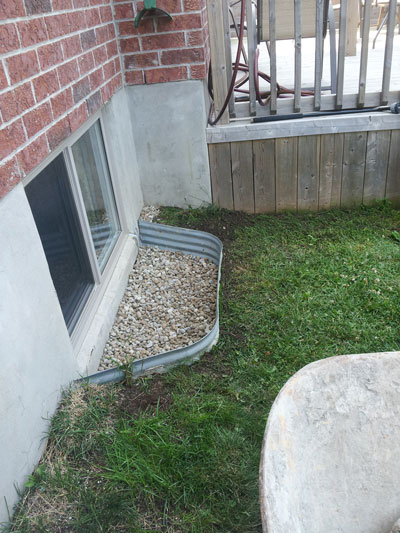
Window wells deserve their own paragraph. They are moisture traps by design. In clay soils, a well is a cup unless you provide a proper drain. The classic fix is a vertical pipe, often 100 millimetres in diameter, set to the footing drain with washed stone around it. That only works if the footing drain flows. It also needs a clean stone base under the well, a rigid well that will not deform under backfill, and a clear plastic cover in winter to shed snow while still breathing in shoulder seasons. Do not pile mulch or topsoil above the well lip. It will rot the sill and defeat the grading.
Exterior vs interior waterproofing, and when each makes sense
Homeowners often frame this as a binary choice. In practice, the right answer depends on where water is coming from, what your yard allows, and how your house is built.
Exterior excavation to the footing, cleaning the wall, applying modern elastomeric waterproofing, adding a dimpled drainage membrane, replacing the weeping tile with perforated PVC wrapped in a proper filter, and backfilling with clean stone gives you the most durable defense against ground moisture. It also corrects foundation drainage for the next generation if it is done well. The tradeoff is disruption, cost, and, in winter, feasibility. You need access wet basement solutions london around decks, air conditioners moved, and plantings sacrificed or carefully lifted. In tight urban lots or in winter, you may have to stage work or pick interior solutions first.
Interior drainage along the slab edge, coupled with a reliable sump, controls symptoms efficiently when the main problem is under-slab groundwater or a high water table. You do not fix the outside source, but you create a safe pathway and reduce pressure at the cove joint. For finished basements, you will open the perimeter floor, protect walls with a vapor barrier, and integrate a dehumidifier to manage air moisture that a cold concrete wall will condense.
Epoxy crack injection sits in a third category. It is a surgical fix for discrete wall cracks in poured concrete. It does not solve drainage, but it seals the path. In block walls, cavity injection is trickier. Often the better answer for block is relieving pressure through drainage, then addressing structure with straps or beams if needed.
Cost gives another lens. In London, an interior perimeter drain with sump often lands in the range of 60 to 120 dollars per linear foot, depending on obstacles and discharge complexity. Exterior excavation and new weeping tile usually starts north of 120 dollars per linear foot and can reach 250 to 300 when access is tight or the wall needs extra prep. A quality primary sump pump, pit, and check valve install typically runs 1,500 to 3,500 dollars, with battery backups adding 800 to 2,000 depending on capacity. These are broad ranges. Soil, depth, and existing finishes push them up or down. Good contractors will walk you through why your number sits where it does.
Small drainage choices that handle big storms
Most wet basements I see in London share two outside conditions: downspouts that dump within a metre of the wall and flat grade near the foundation. Both are fixable without a shovel at footing depth.
The roof is your biggest watershed. A 1,500 square foot roof in a summer storm that drops 25 millimetres of rain sends roughly 950 litres of water to the eavestroughs. If those troughs are undersized or clogged, that volume sheets off the edge and hits the soil against your wall. Aim for clean, continuous eavestroughs sized for your roof area. Keep a gentle pitch to the downspouts. Extend downspouts at least two to three metres from the foundation. Rigid extensions buried just under the turf with a solid pipe and a pop up emitter work well in front yards. In winter, swap to above ground extensions you can keep clear of snow and ice.
Grading is the quiet hero. Over the first two metres from the wall, target a drop of at least 100 millimetres, more if your soil is clay. Use a high clay content topsoil or a packed soil mix to rebuild slope, then cover with turf or stone. Avoid deep mulch against the house. It will hold moisture at the wall and settle over time. Where concrete walks hug the foundation, inspect caulking at the joint. A narrow gap at the slab wall interface channels water down the face of your foundation. With repeated freeze thaw, that joint opens quickly. Backer rod and a self leveling polyurethane sealant last better than acrylic.
Driveway slopes need extra attention on narrow lots. A driveway that pitches toward the house funnels stormwater straight at a basement wall. In those cases, a trench drain with a frost resistant channel and a solid discharge to the street or a soakaway pit can be the difference between dry storage and a recurring puddle.
What the Thames River adds to the equation
Living near a river shapes groundwater even if you never see the bank. The Thames slices across London with tributaries branching into neighborhoods. Water levels in the river influence the elevation of the local water table in adjoining soils through hydraulic connection. After extended rain or snowmelt, the river swells, and the effective drainage level in nearby weeping tiles rises. That means even perfect footing drains will not drain if their outlet is under water.
I have worked in houses in Old South where the basement stayed bone dry through quick storms yet leaked after three quiet days of steady rain. The weeping tile outlet tied into a storm line that ran full whenever the river rose. The fix was a combination: isolating the footing drains from the municipal line where possible, adding a sump with a dedicated discharge to grade well away from the house, and creating redundancy so the system had a path even when city infrastructure backed up. It is also one reason you do not want your sump discharge tied into a sanitary line, which is not permitted and leads to flood risk for you and your neighbors.
How to read early signs before they get expensive
Water telegraphs its presence long before it floods a floor. Musty smell after a storm tells you moisture is wicking somewhere, even if surfaces look dry. Efflorescence, that white crust on concrete or masonry, marks a path where water evaporated and left salts behind. Paint that bubbles only along the bottom 150 millimetres of a wall is not bad paint. It is vapor pressure lifting a coating that could not breathe. Rust at the base of steel jack posts or along the flange of an I beam embedded in a wall flags periodic dampness.
Listen to your sump pump. If it cycles in dry weather or hums too long, you might have a stuck float or a partially clogged line. A good pump moves water fast and then rests. Pumps that short cycle burn out early. Make sure the check valve sits high enough to reduce water hammer, and that the discharge rises cleanly before it runs out, without low loops that collect winter ice.
A short seasonal checklist that pays off
- Clear and flush eavestroughs in late fall and late spring, then check for proper pitch during a hose test. Extend downspouts two to three metres from the foundation, swapping to above ground extensions before winter. Walk the perimeter each spring to confirm at least 100 millimetres of fall over two metres, adding soil where it settled. Keep window wells clear, add covers before heavy snow, and verify each well has a drain that actually flows. Test your sump pump and backup system before the wettest month in your area, and keep the discharge free of ice.
When foundation repair becomes the main event
Waterproofing and drainage solve most moisture problems. Structure comes into play when weather, soil, and time push a wall past what drainage can relieve. Horizontal cracks along the midline of a block wall, inward bowing that you can measure with a straight edge, or shearing at the bottom course where the wall slides slightly on the footing are all signs of lateral load from saturated clay and frost pressure. In London, foundation repair often means a mix of methods. Carbon fiber straps stabilize modest bowing with minimal intrusion. Steel I beams anchored top and bottom handle greater loads. Excavation to relieve exterior soil pressure and replace backfill with clean stone removes the cause for future movement. Each tool has limits. Straps do not correct large deflections. Beams need bearing design so they do not crush joists. Exterior work is constrained by access and season.
When a poured concrete wall has a single, clean vertical crack that leaks, injection is smarter than excavation 9 times out of 10. When a wall is spiderwebbed with fine cracks and efflorescence from corner to corner, you likely have a drainage and pressure issue not a single point failure. That is the difference between sealing a path and lowering the water around your foundation for good.
Health inside the house, not just dry concrete
Moisture problems affect air quality. Basements run cooler than the rest of the house. Warm, moist summer air that drifts downstairs hits those cool surfaces and condenses. If you smell earth after a storm, you are almost certainly running above 60 percent relative humidity at times. That is mold friendly territory. A good waterproofing system for London homes often includes a dehumidifier sized for the space and the leakage rate of the building. Aim to hold 45 to 50 percent relative humidity in summer. In winter, stay cautious. Over drying can crack wood trim and floors upstairs, while too much humidity risks window condensation and ice.
Insulation choices tie into this. Fiberglass batts against an uninsulated concrete wall act like a sponge. If you are finishing a basement, use continuous rigid foam against the concrete with sealed seams, then frame a wall in front. Keep organic materials off the concrete itself. That assembly keeps the interior face warm enough to stay dry in summer and offers a path for any incidental moisture to drain to the interior system without feeding mold.
Two London case snapshots that show the weather link
In a mid century bungalow near Masonville, a homeowner noticed damp carpet edges each May. The rest of the year, dry. The yard sloped gently away, but the downspouts dumped into corrugated black pipe that disappeared toward the sidewalk. We smoke tested those lines and found they tied into a crushed clay tile laid decades before. During steady spring rains, the ground filled and those buried extensions acted like French drains in reverse, feeding water along the foundation. We abandoned the buried runs, added rigid surface extensions, corrected a low spot near the basement stair walkout, and installed a small interior drain section only near a chronic cove joint. The next spring, the sump pinged occasionally, and the carpet stayed dry.
In Old East, a two story with a block foundation showed a horizontal crack at mid height on the north wall with a 15 millimetre inward bow at the worst point. The homeowner reported cracking sounds each January after a thaw and refreeze. The grade was flat, the neighbor’s driveway shed water toward this wall, and the soil was a tight clay. We installed steel beams on that wall, sawcut a narrow interior drain with a sump to relieve cove pressure, sealed the rim joist to cut humidity swings, and worked with the neighbor to add a trench drain along the edge of the driveway. That winter, no new movement. The following spring, even with repeated rains, no leakage.
Both houses sat less than 10 kilometres apart. The common threads were seasonal moisture loads and simple paths for water to follow. The fixes differed because the problems did.
How to choose the right contractor and plan timing
Basement waterproofing in London, Ontario is a busy trade in April and May. If you can, book assessments in late summer or early fall. Crews have time to dig before frost, and you will not be in a rush as the snow melts. Look for contractors who start with diagnosis, not a one size plan. Expect them to ask about timing of leaks, weather patterns when they happen, and to walk the outside before they quote the inside. If a company sells only interior systems, they will often recommend them. If they do only exterior excavations, they may default that way. Balanced firms explain tradeoffs and show you the water path they are addressing.
Ask about discharge routing. In Ontario, sump discharge should not connect to sanitary sewers. It needs a clear, legal path to grade that will not ice over in January or erode a neighbor’s yard. For exterior work, ask what filter fabric wraps the stone around the new footing drains, which waterproofing membrane goes on the wall, and how they handle transitions at porches, steps, and service penetrations. The devil lives in those details.
Verify that proposals include surface drainage improvements. It makes little sense to spend on interior drains yet leave a rear corner with flat grade and no downspout extension. The most durable waterproofing plan blends foundation repair where needed with sensible water management above ground.
Putting it all together
London weather is not gentle on basements. Freeze thaw cycles work like a ratchet on small flaws. Lake effect systems and spring thaws load soil with water for weeks at a time. Summer storms test drainage with volume and speed. If you have a wet basement, London, Ontario climate patterns usually explain the when and the how. The strongest plans respect those patterns. Get roof water away, shape the ground to shed, relieve pressure where it builds, and reinforce structure where weather and soil have pushed too far. Then keep an eye and an ear on the system. Foundations rarely fail overnight. They speak in creaks, stains, and pump cycles. Listen early and act before the forecast makes the decision for you.
Ashworth Drainage — Business Info (NAP)
Name: Ashworth DrainageAddress: 514 Hale St, London, ON N5W 1G8
Phone: (519) 660-9375
Website: https://www.ashworthdrainage.ca/
Email: [email protected]
Hours:
Monday: 9:00 AM – 5:00 PM
Tuesday: 9:00 AM – 5:00 PM
Wednesday: 9:00 AM – 5:00 PM
Thursday: 9:00 AM – 5:00 PM
Friday: 9:00 AM – 5:00 PM
Saturday: Closed
Sunday: Closed
Open-location code (Plus Code): XRR3+HV London, Ontario
Map/listing URL: https://maps.app.goo.gl/9kaoXAxRtJRP1ThS9
Embed iframe:
Socials (canonical https URLs):
Facebook: https://www.facebook.com/ashworthdrainage/
X: https://twitter.com/ashworthrules
Instagram: https://www.instagram.com/ashworthdrainage/
https://www.ashworthdrainage.ca/
Ashworth Drainage provides basement waterproofing and foundation repair services in London, Ontario and surrounding areas in Southwestern Ontario.
The company helps homeowners address wet basements, water intrusion, and drainage issues with solutions that fit the property’s conditions.
Service requests can include foundation repair, waterproofing options, sump pump and drainage-related work, and related assessments.
Ashworth Drainage is based at 514 Hale St, London, ON N5W 1G8.
To reach the team, call (519) 660-9375 or email [email protected].
Business hours are Monday to Friday 9:00 AM–5:00 PM, with the office closed Saturday and Sunday.
For directions and listing details, use the map listing: https://maps.app.goo.gl/9kaoXAxRtJRP1ThS9.
Popular Questions About Ashworth Drainage
What does basement waterproofing help prevent?Basement waterproofing is intended to reduce water intrusion and moisture problems that can lead to dampness, leaks, odors, and damage over time.
How do I know if I may need foundation repair?
Common signs can include visible cracks, water seepage, shifting or uneven areas, or recurring moisture problems; an on-site assessment is usually the best way to confirm causes and options.
What areas does Ashworth Drainage serve?
Ashworth Drainage serves London, Ontario and surrounding areas in Southwestern Ontario.
What are Ashworth Drainage’s hours?
Monday–Friday 9:00 AM–5:00 PM; Saturday closed; Sunday closed.
How can I contact Ashworth Drainage?
Phone: +1-519-660-9375
Email: [email protected]
Website: https://www.ashworthdrainage.ca/
Map: https://maps.app.goo.gl/9kaoXAxRtJRP1ThS9
Facebook: https://www.facebook.com/ashworthdrainage/
X: https://twitter.com/ashworthrules
Instagram: https://www.instagram.com/ashworthdrainage/
Landmarks Near London, ON
1) Kiwanis Park2) Western Fair District
3) Covent Garden Market
4) Victoria Park
5) Budweiser Gardens
6) Museum London
7) Fanshawe Conservation Area